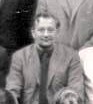

1926 to 1993, United Kingdom · Director of the Applied Psychology Unit, Cambridge
Also known as: Donald E. Broadbent
Donald Eric Broadbent directed the Medical Research Council's Applied Psychology Unit in Cambridge from 1958 to 1974, the laboratory that produced much of the early evidence on attention, vigilance and human error. His 1958 book Perception and Communication introduced the filter theory of attention: that humans cannot process all incoming information in parallel, so an early selective filter chooses one channel (typically by physical property such as ear or voice) for further processing.
The theory was tested with the dichotic listening paradigm and refined by his students Anne Treisman and Neville Moray. Broadbent remained pragmatic about applying the resulting science: his Cambridge unit was as concerned with the design of factory tasks, cockpit displays and public-information signs as it was with laboratory theory, and many of the foundational human-factors results in this textbook trace back to his lab.
Related people: Anne Treisman, William E. Hick
Works cited in this book:
Discussed in:
- Chapter 4: Attention and Decision-Making (Selective Attention)
- Chapter 4: Attention and Decision-Making (Dichotic Listening and Filter Theory)