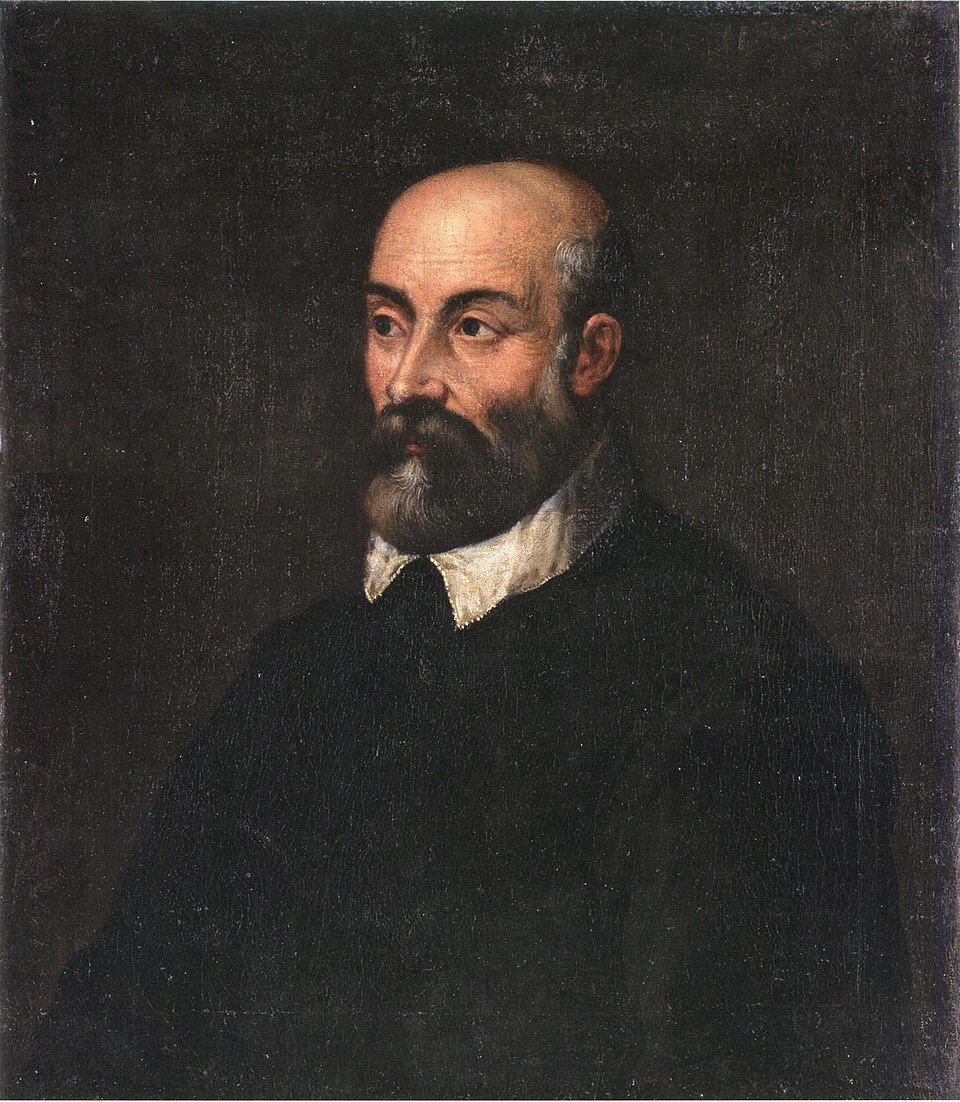

1508 to 1580, Italy · Renaissance architect; codifier of classical proportion
Also known as: Andrea di Pietro della Gondola
Andrea Palladio (born Andrea di Pietro della Gondola, the byname Palladio given to him by his patron Giangiorgio Trissino) is the most influential architect in Western history after Vitruvius. His villas in the Veneto, his churches in Venice, and the basilica and palazzi of Vicenza form a body of work that Renaissance and post- Renaissance architects studied as a canon.
His treatise I Quattro Libri dell'Architettura (1570) collected orders, proportions, room shapes and plan types into a systematic pattern book that informed almost every major public building in Britain and the United States from the eighteenth century onward (the White House, the Capitol, the British Museum and the work of Inigo Jones, Christopher Wren and Thomas Jefferson all draw on Palladian rules). His seven preferred room proportions, derived from musical harmonic ratios, formalised the architectural insight that pleasing spaces have measurable, replicable shapes.
Related people: Vitruvius, Christopher Alexander
Works cited in this book:
Discussed in:
- Chapter 9: Design Laws from Architecture (Palladio and the Pattern Book)
- Chapter 9: Design Laws from Architecture (Proportions and the Golden Ratio)